
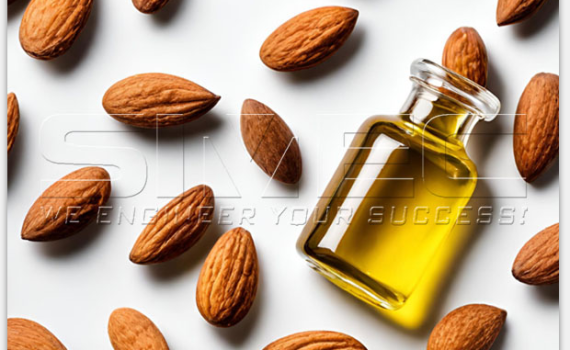
Advantages of Cold-Pressed Almond Oil
As a high-value woody plant oil, almond oil has gained increasing popularity in the health food and high-end skincare industries in recent years. Its core value lies in its rich content of unsaturated fatty acids (up to 90%) and various active nutrients. However, these precious nutrients are very delicate and extremely sensitive to temperature.
For almond oil, the extraction process is the core factor determining its market value and quality. The differences between cold-pressed extraction (typically kept below 60℃, with some processes at 40–50℃) and traditional hot-pressed extraction (usually 120–130℃) directly dictate the nutritional composition and sensory experience of the final product.
High temperatures are a double-edged sword. While they can increase oil yield, they ruthlessly destroy many of the precious active ingredients in almonds. Data shows that cold pressing retains vitamin E to the greatest extent possible, as this powerful antioxidant is partially degraded and lost during hot pressing due to the high temperatures. Furthermore, the core value of almond oil, its high content of up to 95% unsaturated fatty acids (oleic and linoleic acids), is effectively protected in cold pressing, avoiding isomerization or oxidation that can be caused by high temperatures.
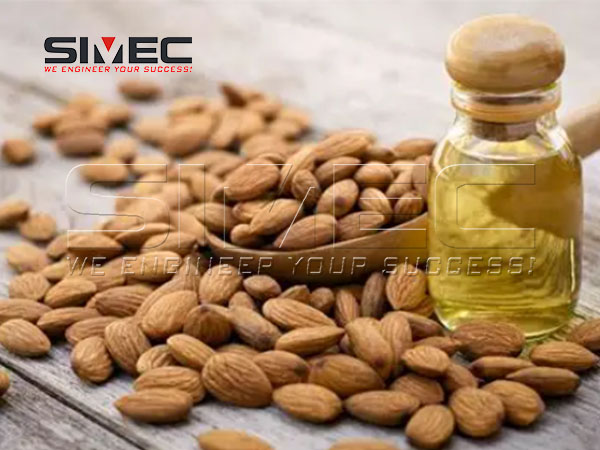 | 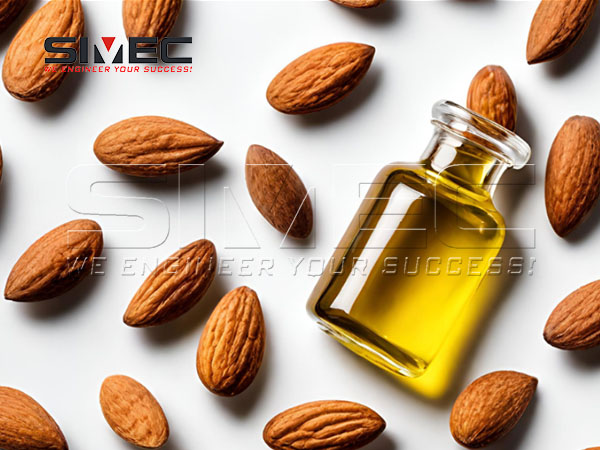 |
Besides its core nutrients, cold-pressed almond oil retains its unique sensory qualities. It is typically light in color (pale yellow or slightly yellow), clear and transparent, and has a natural, pleasant aroma. In contrast, hot-pressed oils, due to the high-temperature reaction (Maillard reaction), are darker in color and have a burnt smell.
To make a more intuitive comparison, we can use the table below to understand the key differences between the two processes:
| Low-Temperature Cold Pressing | Traditional Hot Pressing | |
| Processing temperature | Below 60℃ (usually 40-50℃) | 120℃ – 130℃ |
| Oil extraction efficiency | Relatively low | Relatively high |
| Vitamin E retention | Maximum retention | Lower (decomposition of some heat-sensitive components) |
| Unsaturated fatty acids | Intact (structure not damaged by high temperature) | Possibly damaged (partial oxidation or isomerization) |
| Squalene | Maximized retention | 50% lost |
| Color and smell | Pale yellow/slightly yellow, clear, with a natural fragrance. | Dark yellow/brown, with a burnt/cooked smell. |
Therefore, when choosing almond oil, it is important to look for the label “low-temperature cold-pressed”. This not only represents higher nutritional integrity but also delivers more natural health benefits to you.
The key to producing this high-quality low-temperature almond oil lies in precise temperature control. This requires not only advanced processing technology but also specialized equipment capable of low-temperature, high-pressure physical pressing. A stable, temperature-controlled oil press is essential for unlocking the high nutritional value and added value of almond oil.