
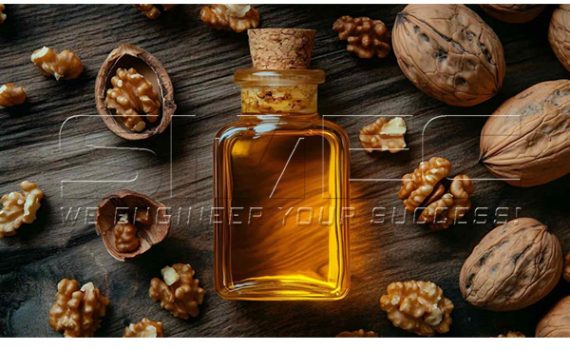
Guide for Profitable Walnut Oil Production
Walnut oil is known as “Oriental olive oil”, because it is rich in unsaturated fatty acids, with a content of over 92%. Its balanced ratio of linoleic acid and alpha-linolenic acid gives it multiple health benefits, including improving brain function, protecting the cardiovascular system, and beautifying the skin. Investment in walnut oil production hinges on viable commercial operation. Successful development relies on effective control of raw material costs, production techniques and market positioning.
Cost Control via Rational Raw Material Selection
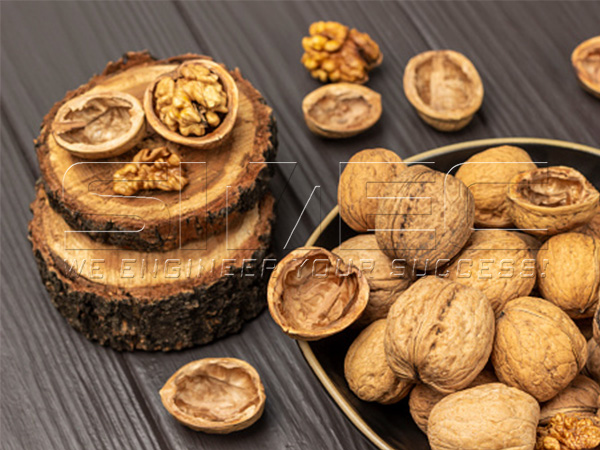
Raw material costs constitute the largest portion of total project costs. To achieve the optimal balance between cost and quality, procurement should focus on major production regions in China, such as Aksu and Wensu in Xinjiang, or Yunnan. Due to sufficient sunlight, walnuts from these regions have an average oil content of over 65%. Compared to ordinary varieties with only 55% oil content, this directly increases extraction efficiency by approximately 10%, representing pure profit.
Regarding procurement strategy, avoid high-priced premium edible walnuts. Instead, select “secondary fruit” or “aged walnuts” with surface defects but intact kernels. The purchase price for these materials is typically half that of premium fruit. Provided the kernels are free from mold, the quality of the extracted oil shows no significant difference, which can substantially reduce initial investment.
 |  |
Hydraulic Cold Pressing Optimizes Oil Quality
Production technology directly determines product grade and market competitiveness. To build a premium cold-pressed oil brand, it is essential to use a hydraulic oil press and strictly control the moisture content of walnut kernels within the 6%-8% range.
Hydraulic presses adopt static high-pressure extraction, ensuring the temperature remains below 60°C throughout the process. This avoids the nutrient loss and scorched flavor caused by the high-speed friction and heat generated by screw presses. The resulting walnut oil has a golden color and pure flavor, providing solid support for product premium pricing. Furthermore, precise moisture control is another key factor in ensuring high extraction rates; for every 1% deviation from the optimal moisture range, the extraction rate fluctuates by 2%-3%.
Market Positioning & Precise Customer Targeting
In terms of product positioning, direct competition with mass-market edible oil brands in supermarket channels must be avoided. Instead, the focus should be on entering high-value-added niche markets. The core selling point of walnut oil is its richness in α-linolenic acid, the content of which is 8 times that of olive oil. Moreover, the ratio of linoleic acid to linolenic acid is close to 4:1, which is similar to the composition of breast milk. Therefore, two target customer groups should be precisely targeted:
- The Maternal and Infant Group: Positioning the product as “infant complementary food oil.” This group is highly sensitive to quality but less sensitive to price.
- High-End Gift Consumers: Individuals pursuing a healthy lifestyle.
To ensure product quality and brand reputation, packaging must use dark glass bottles or tin cans that protect against light and oxidation. Nitrogen flushing technology is also recommended to solve the problem of walnut oil’s susceptibility to oxidation.
Driven by growing health consumption demand, walnut oil well meets the demands of infant diet and high-end health preservation. Supported by advanced cold pressing technology and robust branding strategies like organic certification and online promotion, the walnut oil industry keeps advancing toward high-end and high-value development.